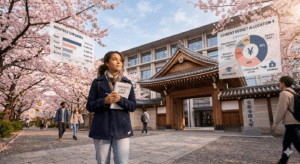

Your Student Visa Ends at Graduation: Working in Japan After
The Job-Hunting Extension Visa Explained
Here’s something many students don’t realize until it’s almost too late: your Student residence status becomes invalid the moment you graduate. It doesn’t matter if your Resident Card shows a date months away — once you’ve graduated, that status is gone. You need to act before graduation day, not after.
The good news is Japan has a visa built for this exact situation. It’s called the Designated Activities visa (No. 46), and it gives graduates extra time to find a job while staying legally in Japan. You get up to 6 months at first, and you can extend it up to 12 months total.
Documents You Need to Apply
Getting your paperwork right is the part that trips most people up. The core documents you’ll need include your graduation certificate, a recommendation letter from your university’s career office, and proof that you’re actively searching for work.
You’ll also need to show you can support yourself financially while you search. Think bank statements or similar evidence that you’re not going to run out of money mid-hunt. Missing even one document can delay your application, so treat this list as a strict checklist, not a rough guide. For the official requirements, check the Ministry of Foreign Affairs of Japan visa information page directly.
Start gathering these before your final exams.
How Shukatsu Works for International Graduates
Understanding the Shukatsu Timeline
Shukatsu is Japan’s new-graduate hiring system, where companies recruit and hire fresh graduates in one large annual cycle. Almost every major Japanese firm follows the same schedule, so knowing the calendar is half the battle.
Here’s how it works: companies open recruitment marketing in March, start formal screening in June, and issue unofficial job offers — called naitei — from October. All of this happens one full year before the April 1 start date. That means if you graduate in March 2027, you should start shukatsu in early 2026.
The results speak for themselves. Among March 2025 graduates, 98% had secured a job offer by graduation day.
What Employers Look for in International Candidates
Japanese employers value international graduates for real, practical reasons — your language skills, your cultural range, and your global perspective. These aren’t just nice extras; many firms actively need people who can bridge Japan and the wider world.
That said, Japanese language ability still matters a lot in most roles. Business-level Japanese — roughly JLPT N2 — is a strong asset and, for many positions, a firm requirement. Companies also look for clear communication, a stable work history (even part-time counts), and evidence that you understand Japanese workplace culture.
Your university’s career center is your best starting point.
Work Visas, Salaries, and Long-Term Options in Japan
The Engineer/Humanities Visa and the New N2 Rule
Once you have a job offer, your employer will start the visa change process. The most common work visa for graduates is the Engineer/Specialist in Humanities/International Services visa. As of end-2025, around 475,000 people hold this status — the second-largest foreign resident group in Japan.
Your degree field must generally match your job duties. Processing takes 2–4 months, so if you’re aiming for an April 1 start date, your employer should file the paperwork by November or December of your final year.
One big change came into effect on April 15, 2026.
Fast-Tracking PR with the Highly Skilled Professional Visa
Working in Japan long-term becomes much easier once you understand the Highly Skilled Professional (HSP) visa. It’s a points-based system that rewards your degree level, salary, age, Japanese ability, and employer type. JASSO also publishes useful guidance for international students navigating life and work in Japan after graduation.
Hit 70 points and you can apply for permanent residency in just 3 years. Hit 80 points and that drops to 1 year. For context, most standard work visa holders wait 10 years for PR eligibility.
Your starting salary matters here too. The average new-graduate monthly salary reached approximately ¥254,232 in 2025. A higher salary boosts your HSP score directly, so negotiating well early in your career has real long-term payoff.