The Honest Truth About Japanese Requirements to Study in Japan
Do You Need Japanese to Get Into a Language School?
You don’t need fluent Japanese to apply, but you do need at least JLPT N5 level — the most basic level, covering fundamental grammar and everyday vocabulary. This is a requirement you must already meet before submitting your application documents; language schools do not teach you up to N5 as part of enrollment. If you’re currently below N5, plan to study independently or take a preparatory course in your home country before applying.
However, each school has its own rules. Some ask for a short interview in Japanese. Others only check your motivation letter and finances.
A Japanese language school is a full-time school where you study Japanese every day. Most programs run for one to two years. So, you learn the language while you are there — not before.
Therefore, your current level does not block you from applying. Focus instead on showing strong motivation. Schools want students who are serious and ready to work hard.
What JLPT Level Do Universities Really Want?
Universities in Japan are very different from language schools. Most require JLPT N2 at minimum. Some top schools want N1.
Also, JLPT is a Japanese language test with five levels. N5 is the easiest. N1 is the hardest.
So, if you are at N5 or N4 right now, a university is not your next step. First, spend one to two years at a language school. Build your skills there.
However, some English-taught university programs exist. These do not require Japanese at all. For example, programs in Tokyo and Osaka often teach fully in English. You can explore scholarship and program options through JASSO Japan Student Services Organization to find programs that match your level and goals.
In short, your path depends on your goal. Choose wisely.
How Much Japanese to Learn Before Studying in Japan
What You Can Realistically Study Before Departure
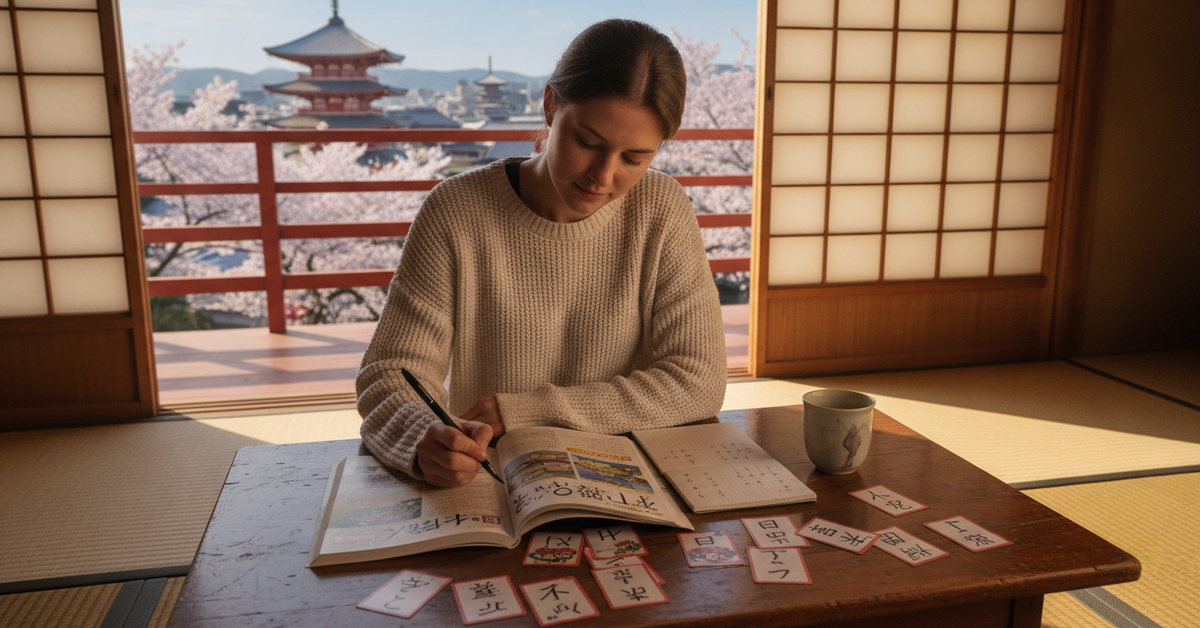
Most students have three to twelve months before they leave. That is enough time to build a solid base. However, you need a clear plan to use that time well.
In three months, you can learn hiragana and katakana. You can also pick up around 200 basic words. That gives you a real head start in class.
For example, apps like Anki and Duolingo help with daily practice. Also, YouTube channels like JapanesePod101 teach fast and stay free. Use at least 30 minutes every day.
Therefore, do not aim for fluency before you go. Aim for basics. Schools will teach you the rest once you arrive.
Survival Japanese vs. Study Japanese: Know the Difference
Survival Japanese means words you need in daily life. For example, how to order food or ask for directions. This type is easy to learn fast.
Study Japanese is harder. It means grammar rules, kanji, and formal speech. You use this type inside the classroom every day.
However, both types matter when you live in Japan. So, learn survival phrases before you depart. Then, focus on study Japanese once your classes begin.
In contrast, skipping survival basics makes daily life very hard. Simple tasks like buying train tickets become stressful. Also, it slows your confidence in the early weeks.
Therefore, split your prep time between both types. Balance is key.
How to Choose the Right School for Your Japanese Level
Matching Your Current Level to the Right School Type
Your Japanese level decides which school type fits you best, so start by being honest about where you currently stand. If you’re unsure, Globe’s Personalized Study Abroad Roadmap includes a level assessment as part of the process, helping you see exactly where you stand and what to do next.
For example, students at JLPT N5 level typically fit well at language schools, which build on that foundation. In contrast, students at N2 or above can apply to vocational schools or universities.
However, school type is not the only factor. Also consider class size, location, and school culture. Some schools suit quiet learners. Others push a fast, intense pace.
Therefore, match the school to your learning style too. A wrong fit wastes time and money. Choose a school where you can truly grow.
How a School Recommendation Service Saves You Time
Picking the right school takes weeks of research. There are hundreds of options across Japan. Furthermore, school websites are often only in Japanese.
A school recommendation service is a paid service that matches you to the best schools. It saves you hours of confusing research. Also, it reduces the risk of a poor school fit.
For example, Globe Co., Ltd. offers a Personalized Study Abroad Roadmap. This service starts by understanding your goals, dreams, and future plans, giving you a clear, step-by-step plan so you always know what to do next.
Once that groundwork is in place, Globe also offers a 3-School Proposal service, which uses your goals, budget, and level to suggest three schools that truly match your needs.