Understanding the Cost of Studying in Japan: Tuition Fees
National vs. Public University Fees Explained
National universities in Japan are managed by the government. They offer the most affordable tuition for international students. The standard annual tuition fee is around ¥535,800 (approximately $3,600 USD). Additionally, there is a one-time enrollment fee of about ¥282,000. So, your first-year cost at a national university starts near ¥817,800. Public universities run by local governments have similar fees. However, some charge slightly higher rates for international students. Overall, national and public universities are the most budget-friendly options. They also maintain strong academic reputations across many fields.
Private University Tuition: Key Numbers to Know
Private universities in Japan cost considerably more than national schools. Annual tuition typically ranges from ¥800,000 to ¥1,200,000 depending on your faculty. Science and medical programs often sit at the higher end of this range. Humanities and social science programs tend to be more affordable. First-year students also pay an enrollment fee between ¥200,000 and ¥400,000. Therefore, your total first-year expense can easily reach ¥1,500,000 or more. Despite higher costs, many private universities offer excellent scholarship programs. Always check each university’s financial support options early. Smart planning helps manage the cost of studying in Japan at private institutions.
Living Costs in Japan: Monthly Student Budget Breakdown
Housing, Food, and Transport Expenses
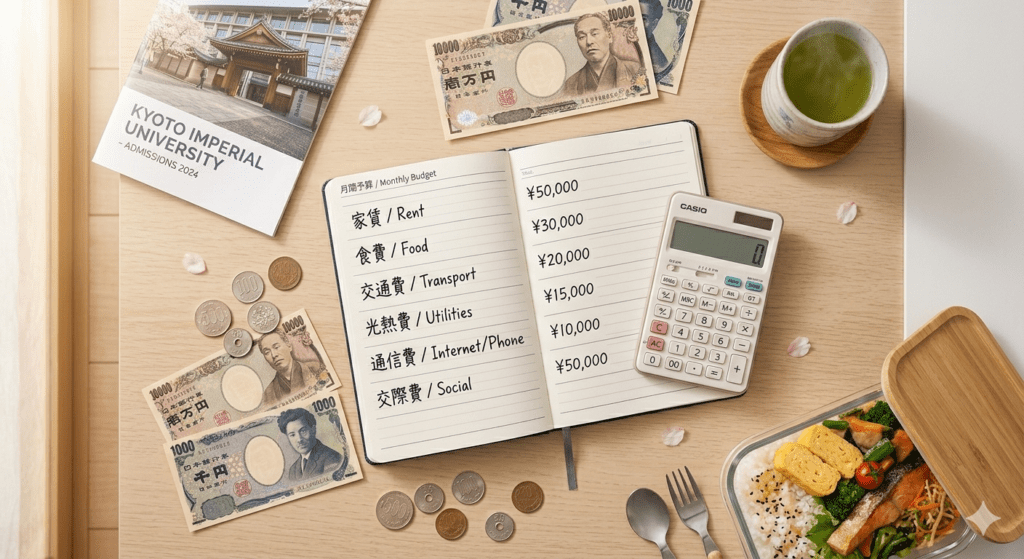
Housing is usually the biggest monthly expense for students in Japan. A university dormitory costs between ¥15,000 and ¥30,000 per month. Private apartments typically range from ¥40,000 to ¥70,000 depending on location. Tokyo and Osaka tend to be more expensive than smaller cities. For food, most students spend around ¥30,000 to ¥40,000 monthly. Cooking at home helps reduce this cost significantly. Monthly transportation passes cost roughly ¥5,000 to ¥10,000 in most cities. Students get discounted train passes, which helps lower daily travel costs. Combined, these three categories form the core of living costs in Japan for students.
Hidden Daily Costs Students Often Overlook
Many students forget to budget for smaller but frequent daily expenses. Phone plans in Japan cost around ¥3,000 to ¥5,000 per month. Health insurance under the National Health Insurance system costs roughly ¥1,000 to ¥2,000 monthly. Utility bills including electricity, gas, and water add another ¥5,000 to ¥8,000. School supplies, printing, and course materials also add up quickly each semester. Social activities, travel, and clothing are easy to underestimate in your budget. Setting aside ¥15,000 monthly for miscellaneous costs is a smart habit. Tracking every expense helps students stay in control of their Japan study budget.
Plan Your Japan Study Budget: Tips to Save Money
How to Estimate Your Total Annual Costs
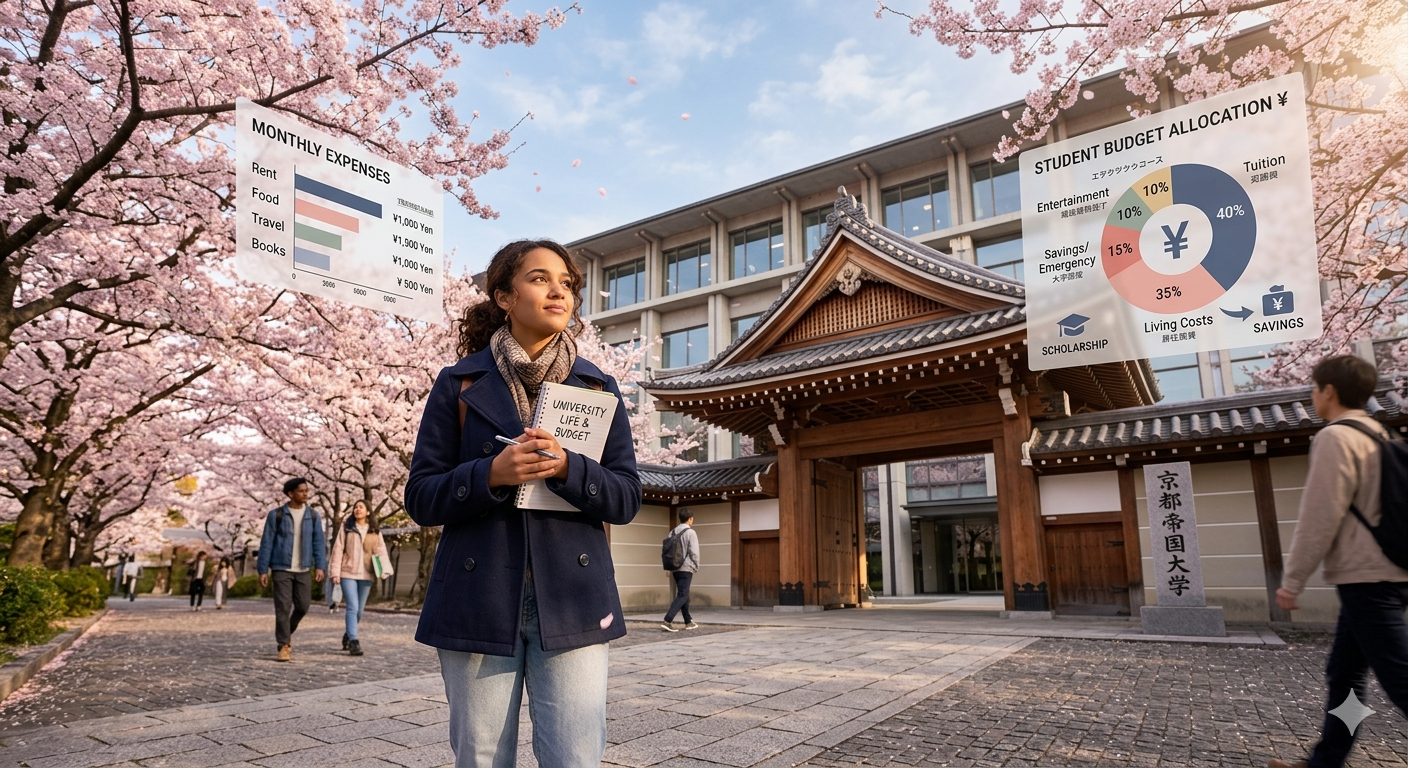
Estimating your total cost of studying in Japan requires looking at all expenses together. Start by adding your tuition fees and enrollment costs for the year. Next, multiply your monthly living costs by twelve to get an annual figure. Include housing, food, transport, and utilities in this calculation. Also add one-time setup costs like bedding, kitchenware, and a phone contract. Most students in national universities spend between ¥1,500,000 and ¥2,000,000 annually. Private university students should budget closer to ¥2,500,000 per year. Always add a 10% buffer for unexpected expenses. Building a detailed spreadsheet early makes your Japan study budget much easier to manage.
Scholarships and Part-Time Work Options
Scholarships are one of the best ways to reduce your study costs in Japan. The MEXT scholarship covers tuition, living costs, and even airfare for selected students. You can explore full details and eligibility requirements directly on the MEXT Ministry of Education, Culture, Sports, Science and Technology website. Many universities also offer their own merit-based financial aid programs. Apply early, as deadlines are often six to twelve months before enrollment. Part-time work is another strong option for international students. A student visa allows up to 28 hours of work per week. Convenience stores, restaurants, and tutoring jobs are popular among students. For additional scholarship listings and financial support options, JASSO Japan Student Services Organization is a trusted resource worth exploring. Earning ¥60,000 to ¥80,000 monthly is realistic with part-time work. Combined efforts can significantly lower the overall cost of studying in Japan.