
Why Japanese Woodworking Tools Are Worth the Search
What Makes Kanna Planes Different from Western Planes
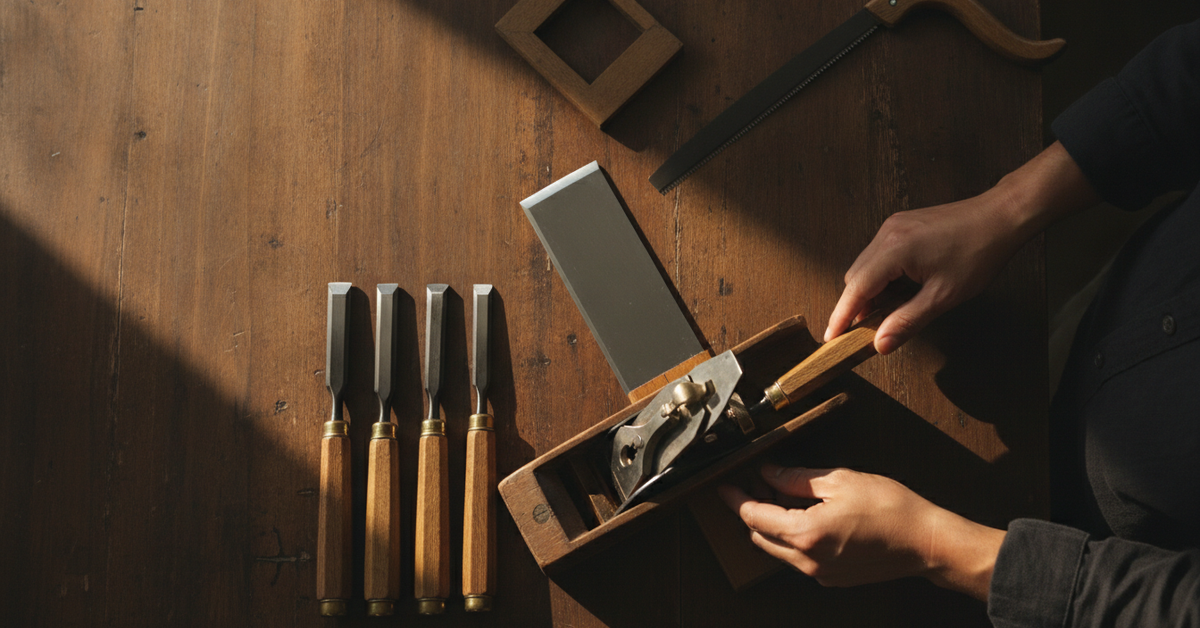
A kanna plane is a Japanese hand plane that you pull toward you, rather than push away. That single difference changes everything about how the tool feels and cuts. The pulling motion gives you far more control, especially on fine grain wood where a slight slip can ruin the surface.
Kanna planes use a laminated blade — hard steel bonded to softer iron. This design lets the cutting edge get sharper than most Western blades can reach. Craftsmen in Japan have refined this construction over centuries, and the result is a blade that takes a mirror-sharp edge with relative ease.
The fit between blade and body is also tighter on a quality kanna.
Why Japanese Chisels Hold an Edge Longer
Japanese chisels are built around the same laminated steel idea as kanna planes. A thin layer of hard high-carbon steel sits at the cutting edge, backed by softer steel that absorbs impact. This keeps the edge sharp far longer than a solid soft-steel chisel would.
The hollow back — called a ura — is another key feature. It makes sharpening faster and more accurate because less steel contacts the stone. You spend less time at the bench and more time cutting.
Good Japanese chisels also have a hooped handle, usually oak or white magnolia, that handles mallet strikes without splitting. The balance feels natural, and the tool responds precisely to light hand pressure.
How to Find the Right Tools from Japanese Retailers
Reading Japanese Tool Listings Without the Language
Most Japanese tool retailers list products in Japanese only, which feels intimidating at first. Don’t let that stop you. A few simple tricks make it manageable, even if you don’t read a single character.
Copy the product name into Google Translate or DeepL. These tools handle Japanese well enough to tell you the blade width, steel type, and intended use. Product photos also carry a lot of detail — look closely at the blade shape, handle style, and any markings on the steel.
Search the retailer’s site using romanized terms like “kanna” or “nomi” and you’ll often find results. Sites like Kakuri Tools use clear category layouts that are easy to navigate visually.
Steel Grade, Region, and Craftsman Reputation
Not all Japanese hand tools are equal. The steel grade is the first thing to check — white steel (shirogami) and blue steel (aogami) are the two most common types used in quality kanna planes and Japanese chisels. Blue steel holds an edge longer; white steel is easier to sharpen to a finer point.
Region matters too. Tools from Niigata, Sanjo, and Miki have long histories of quality production. Many listings name the craftsman or workshop behind the tool, which is a strong signal of authenticity and care. Japan’s traditional tool-making regions are well documented by the Japan External Trade Organization, which tracks regional craft industries across the country.
A named maker with a known region and a stated steel grade — that combination tells you the tool is serious. If a listing skips all three, look elsewhere.
How to Buy Japanese Hand Tools from Overseas
How the Inquiry Form Process Works Step by Step
A proxy shopping service is a company that buys items in Japan on your behalf and ships them to your address abroad. You don’t need to speak Japanese or have a Japanese payment method. The service handles all of that for you.
With Globe Co., Ltd., the process starts with their inquiry form. You find the tool you want — say, a kanna plane from a Japanese specialist retailer — then copy the product URL and paste it into the form along with any details like size or steel grade. Globe’s team then checks availability, confirms the price, and handles the purchase directly.
Once the tool arrives at Globe’s location in Tokyo, they pack it carefully and arrange international shipping to you.
Shipping, Costs, and Delivery Times Explained
Shipping costs depend on the weight of your tools and your destination country. Kanna planes and Japanese chisels are dense, heavy items, so it’s smart to factor in shipping from the start. Globe will confirm the shipping estimate before anything is finalized.
Delivery times vary by shipping method. Air shipping typically takes one to two weeks. Surface mail is slower but cheaper for heavier orders — useful if you’re buying several chisels or a full plane set at once. You can explore available international shipping options through Japan Post’s international services to get a sense of what to expect before your order ships.
Import duties may apply depending on your country’s rules, so check your local customs rates beforehand.
Frequently Asked Questions
What is the difference between white steel (shirogami) and blue steel (aogami) in Japanese hand tools?
White steel sharpens more easily and can reach a finer point, while blue steel holds its edge longer between sharpenings. Both are used in quality kanna planes and Japanese chisels, so your choice depends on whether you prioritize ease of sharpening or edge retention.
Why do Japanese chisels have a hollow back, and what does it actually do?
The hollow back, called a ura, reduces the amount of steel that contacts the sharpening stone. This makes sharpening faster and more precise, so you spend less time at the bench and more time cutting.
How is a kanna plane different from a Western hand plane?
A kanna plane is pulled toward you rather than pushed away, which gives you more control — especially on fine-grain wood where precision matters. The blade is also laminated, bonding hard steel to softer iron, which allows it to reach a sharper edge than most Western blades can achieve.
How can I read Japanese tool listings if I don’t speak Japanese?
Copy the product name into Google Translate or DeepL, which can tell you key details like blade width, steel type, and intended use. Product photos also carry a lot of useful information, and searching with romanized terms like “kanna” or “nomi” often returns results on Japanese retail sites.
How do I know if a Japanese tool listing is for a quality, authentic product?
Look for three things together: a named craftsman or workshop, a stated region such as Niigata, Sanjo, or Miki, and a specified steel grade like shirogami or aogami. If a listing skips all three of those details, it’s worth looking elsewhere.
How does Globe Co., Ltd. help me buy Japanese woodworking tools from overseas?
Globe is a proxy shopping service based in Tokyo that purchases items from Japanese retailers on your behalf and arranges international shipping to your address. You find the tool you want, then submit the product URL and any relevant details — such as blade size or steel grade — through Globe’s inquiry form, and their team handles the purchase and shipping from there.